
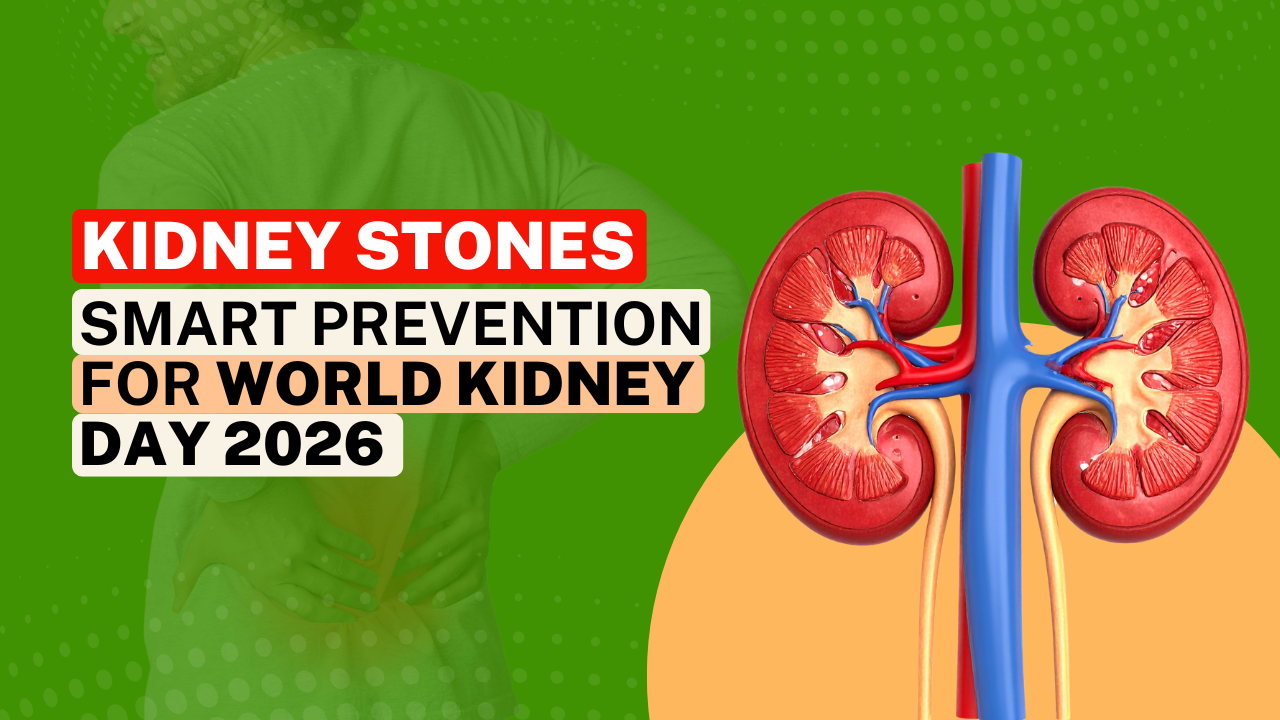
World Kidney Day marks its 20th anniversary on March 12, 2026, with the theme “Kidney Health for All – Caring for People, Protecting the Planet.” Globally, kidney stones affect 106 million new cases annually, while in India prevalence ranges from 1-5% overall, rising to 12% in high-risk stone-belt regions. We’ve planned diets for kidney patients that delivered excellent results in reducing pain and recurrence.
About Kidney Disorders
Kidney stones (nephrolithiasis) cause severe pain and post-renal acute kidney injury through urinary obstructions. Calcium oxalate stones predominate, followed by uric acid types, with rates increasing 1.7-14.8% worldwide.
Risk Factors
High sodium elevates urinary calcium excretion; purines from meats acidify urine, promoting uric acid stones. Oxalates, high uric acid and low dietary calcium heighten risk.
Diet and Micronutrients
Target 1000-1200 mg dietary calcium daily, consumed with oxalate-rich foods (spinach, nuts) during meals to enable gut binding, reducing recurrence by ~50% compared to low-calcium diets. Restrict sodium (<2300 mg), purines (red meats, shellfish), and alcohol; maintain 2+ litres of fluid intake for dilute urine. Alkaline vegetables increase urinary citrate and pH which is a micronutrient-balanced approach that proves effective for patients.
Essential Supplements
Consult professionals first. B vitamins (B6, B12) safely reduce oxalates; potassium citrate benefits selective cases. Avoid vitamin C doses (>2000 mg) or high dose collagen supplements, specially in athletes which may promote stone formation.
5 Key Takeaways
- Hydrate adequately for pale urine (2+ litres, prefer lemon water).
- Pair dietary calcium with oxalate foods.
- Limit sodium and purine-rich foods.
- Use vegetables to balance urinary pH.
- Personalize supplements; prioritize screening
-Anamta Kazi, Sports & Clinical Nutritionist