
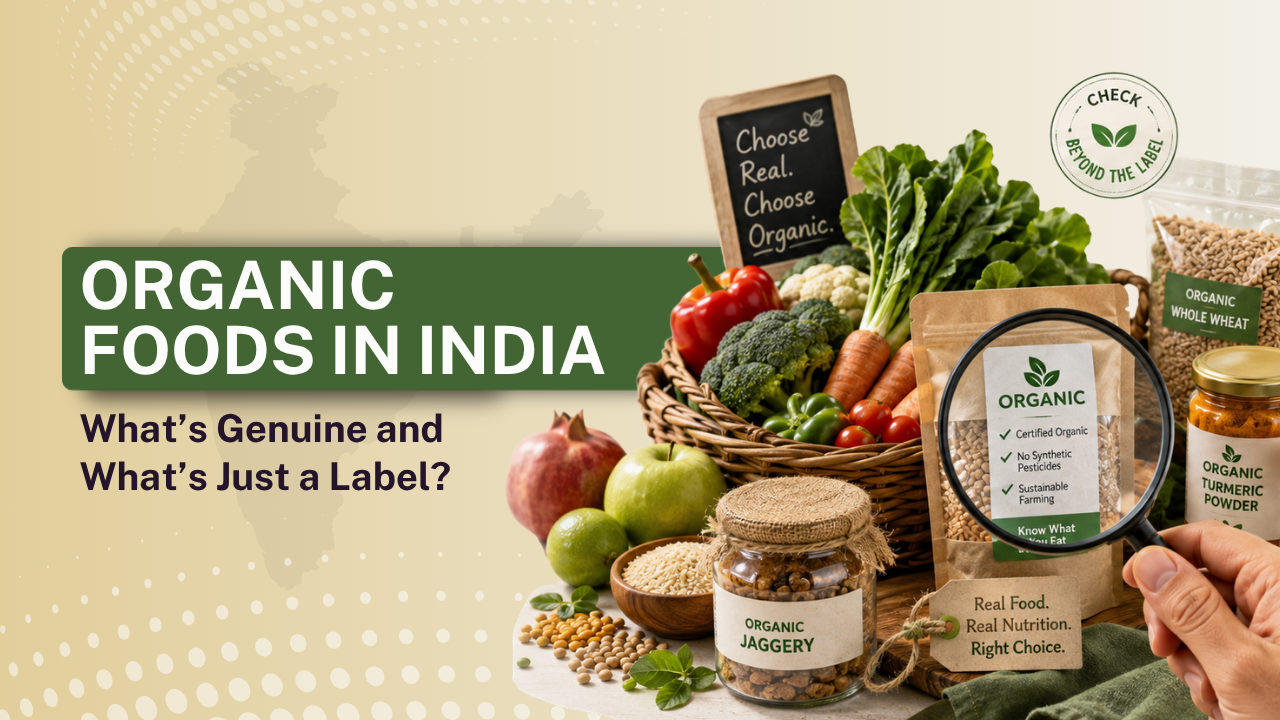
What are Organic Foods?
When we hear the word organic, we often assume it automatically means healthier. But organic actually refers to how food is produced, rather than being a guarantee that the food is nutritionally superior.
In India, organic foods are produced according to recognised organic production standards, with an emphasis on soil health, biodiversity and environmentally responsible farming practices. They are regulated under the Food Safety and Standards (Organic Foods) Regulations, 2017.
But with more products being marketed as “organic”, the bigger question is: how do you know what you’re buying is actually organic?
Why Are Consumers Confused?
Terms such as “natural,” “pure,” “farm fresh,” “chemical-free” or “pesticide-free” are frequently used on food packaging, but they don’t, by themselves, prove that a product is certified organic. This is where certification matters.
India’s Two Organic Certification Systems
- NPOP (National Programme for Organic Production): Overseen by APEDA under the Ministry of Commerce & Industry, this is a third-party certification system widely used for domestic and export markets.
- PGS-India (Participatory Guarantee System): A decentralised system involving farmers and other stakeholders in the certification process, implemented under the Ministry of Agriculture & Farmers Welfare.
How to identify an organic product in 3 steps?
- Spot Logos & Certification Details
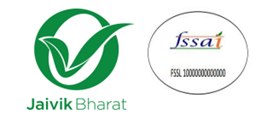
- Jaivik Bharat logo – a green circle with a leaf and tick mark, mandatory for all packaged organic foods under FSSAI’s Organic Food Regulations. It pairs with a valid 14-digit FSSAI license number and logo.
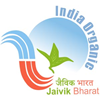
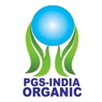
- Depending on the certification system, you may also see the Unified India Organic Logo (NPOP – 8th Edition) or PGS-India Organic Logo (PGS-India).
- The relevant organic certification details on the packaging, such as the certification body for NPOP certified products or PGS group / UID details for PGS-certified products.
- Verify Online
- When in doubt, use the official Jaivik Bharat or Indian Organic Integrity Database to check certified food businesses and products.
- Read Label
- For multi-ingredient products, look for the term “Certified Organic” or “PGS-Organic”, which indicates that at least 95% of the ingredients are certified organic. Single-ingredient products may simply be labelled as “Organic” or “PGS-Organic”, depending on the certification system.
Good to know:
Small farmers may not always need organic certification. If a farmer earns up to ₹12 lakhs a year from organic produce and sells it directly to consumers, they may be exempt from certification, provided they meet FSSAI’s conditions.
So, if you buy vegetables directly from a small farmer at their farm or a local farmers’ market, the absence of an organic certification logo doesn’t automatically mean the farmer is falsely calling the produce organic.
Nutritionist’s Takeaway
Organic doesn’t automatically mean healthier. Organic tells you how a food was produced.
An organic biscuit is still a biscuit. Organic sugar is still added sugar. And an organic packaged snack isn’t necessarily a better choice than a minimally processed conventional food.
If organic fits your preferences and budget, you can choose genuinely certified products. But don’t let the word organic become a health halo.
Look beyond the organic label – check the ingredients, carbohydrate content, protein, fibre and degree of processing and then decide whether it actually fits your nutritional needs.
Your dietary goal determines whether it belongs on your plate. Check the mark, verify when needed, read the label and then judge the food for what it actually is.
–Janvi Dhanak, Sports & Clinical Dietitian.